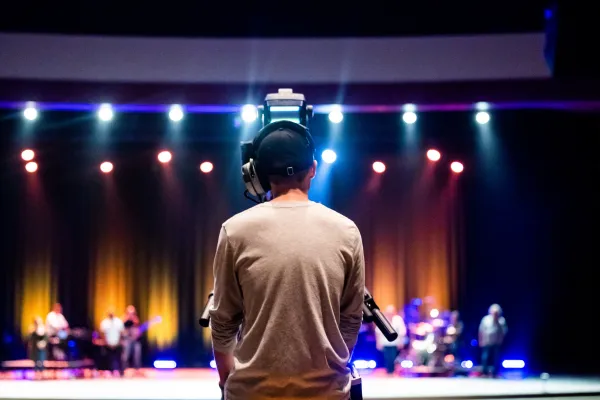
Science-Based Stage Fright Control, Techniques & Tips

Science-Based Stage Fright Control, Techniques & Tips
Key Takeaways
Stage fright is a natural physiological response that even experienced singers and speakers face, but it can be transformed into performance-enhancing energy with proper techniques
Deep breathing, visualization, and reframing anxiety as excitement are scientifically proven methods to control nervous system responses
Regular practice not only improves content delivery but builds neural pathways that reduce anxiety through familiarity
Performance anxiety specialists at SpeakEasy Coaching provide personalized training to transform fear into compelling stage presence
Creating a pre-performance routine with specific physical and mental exercises can dramatically reduce performance anxiety over time
Your heart pounds. Your palms sweat. Your mind races with worst-case scenarios as you wait to take the stage. If this sounds familiar, you're experiencing what neuroscientists call the fight-or-flight response – and you're definitely not alone.
Performance anxiety affects nearly 77% of the population, from beginners to seasoned professionals. The experts at companies like SpeakEasy Coaching and DreamVoice work with clients daily who struggle with these exact symptoms, helping them transform panic into powerful performances. The good news? Stage fright isn't something you need to eliminate – it's something you can harness.
Whether you're delivering a presentation, performing on stage, or speaking at an important meeting, the techniques in this guide will help you take control of your nervous system and channel that energy where it belongs – into a compelling and confident delivery.
Why Your Heart Races Before You Speak (And How to Make It Stop)
Stage fright isn't just "all in your head" – it's a legitimate biological response. When you perceive a threat (in this case, potential judgment or failure), your amygdala triggers a cascade of hormones including adrenaline and cortisol. These prepare your body to either fight or flee, causing those familiar symptoms: rapid heartbeat, shallow breathing, and racing thoughts.
Understanding this biological foundation is crucial – it means you can intervene at the physiological level to calm your nervous system. Dr. Emma Seppälä, Science Director at Stanford's Center for Compassion, explains that "controlling your breath is one of the fastest ways to influence your stress response system," allowing you to shift from panic to performance mode in minutes.
These physiological responses once served our ancestors well when facing physical dangers, but they're less helpful when you're trying to remember your presentation points. The key difference between those who freeze and those who flourish is not the absence of these responses, but how they're managed and channeled.
10 Proven Techniques to Beat Stage Fright Before Your Presentation
The most effective approach to managing stage fright combines both preventative strategies and in-the-moment techniques. The following methods have been tested and refined by professional speakers, performance psychologists, and the thousands of clients who've overcome debilitating stage fright to become confident communicators.
1. Practice Deep Breathing to Calm Your Nervous System
Your breath is the remote control to your nervous system. When anxiety kicks in, your breathing becomes shallow and rapid, triggering more stress hormones. By consciously slowing and deepening your breathing, you can activate your parasympathetic nervous system – the body's natural calming mechanism.
Try the box breathing technique used by Navy SEALs before high-pressure situations: inhale for a count of four, hold for four, exhale for four, hold for four, and repeat. Practice this daily, and your body will respond more quickly when you need to calm yourself before speaking.
The effectiveness of breathing techniques comes from their direct impact on vagal tone – the physiological state of your vagus nerve, which regulates many of your internal organs. Higher vagal tone means better stress resilience and emotional regulation, exactly what you need when facing an audience.
"I used to pop beta-blockers before every presentation. After learning proper breathing techniques, I haven't needed medication in over three years. The difference is I now control my physiology instead of letting it control me." — Michael R., Executive Director
2. Rehearse Until Your Content Becomes Second Nature
There's a direct relationship between preparation and confidence. When you've practiced thoroughly, your brain creates strong neural pathways that require less conscious effort to access, freeing up mental bandwidth that would otherwise be consumed by anxiety.
Effective rehearsal goes beyond simply reading through your notes. Record yourself, practice in front of friends, use different inflections, and even rehearse while doing light physical activity to simulate the adrenaline you'll experience on stage. The goal isn't memorization – it's internalization. You want to know your material so well that you could discuss it naturally in any context.
Studies show that spaced repetition – practicing in shorter sessions spread over time – creates stronger memory retention than cramming. Begin rehearsing at least a week before your presentation, with daily practice sessions growing more intense as your speaking date approaches.
3. Visualize Success Instead of Failure
Your brain responds to vivid mental imagery almost as if it were experiencing reality. Olympic athletes have used visualization techniques for decades, and neuroscience now confirms why: mental rehearsal activates many of the same neural circuits as physical performance.
Spend five minutes daily visualizing yourself delivering your presentation with confidence. Include specific details: see the room, hear your strong, steady voice, feel the positive energy from the audience, and imagine successfully handling any challenges that arise. This creates a "success template" your brain can follow when the real moment arrives.
The most effective visualizations include all five senses and embrace emotional content rather than just visual images. Don't just see yourself speaking confidently – feel the calm certainty in your body, hear the clarity in your voice, and sense the audience's engagement. This multi-sensory approach strengthens the neural pathways that support confident performance.
4. Reframe Nerves as Excitement
The physiological markers of anxiety and excitement are nearly identical – racing heart, heightened alertness, and increased energy. The only real difference is how you interpret these sensations. Harvard psychologist Alison Wood Brooks found that simply saying "I am excited" rather than "I am nervous" before a presentation improved performance significantly. For more insights, explore scientific methods to overcome performance anxiety.
This cognitive reappraisal technique works because it shifts your mindset from a threat response to an opportunity response. Instead of fighting your body's arousal state, you're channeling it toward positive performance. Try saying out loud: "I'm excited for this opportunity to share my ideas" rather than "I'm so nervous about this talk."
With practice, this reframing becomes automatic. Many professional performers report they never lose the pre-performance butterflies – they just teach those butterflies to fly in formation. Your goal isn't to eliminate the physiological response but to interpret it as helpful energy rather than harmful anxiety.
5. Arrive Early to Get Comfortable with the Space
Unfamiliarity breeds anxiety. When you're in a new environment, your brain automatically scans for potential threats, diverting energy from your prefrontal cortex (responsible for higher thinking) to more primitive brain regions. Arriving early neutralizes this response by making the unfamiliar familiar.
Walk the stage or speaking area. Test the microphone. Check your slides on the actual equipment. Stand at the podium or mark where you'll be positioned. This spatial rehearsal creates mental landmarks that reduce uncertainty and increase your comfort level when it's time to perform.
Some speakers even practice a condensed version of their presentation in the empty room, allowing their voice to fill the space and creating sensory memories that will support confidence during the actual event. Your body remembers environments, and giving it advance exposure significantly reduces anxiety triggers.
Physical Methods to Control Stage Fright in the Moment
Even with thorough preparation, most speakers experience some anxiety as their speaking time approaches. These physical techniques provide immediate relief by directly countering your body's stress response. The beauty of these methods is that most can be performed discreetly, even seconds before you're introduced.
The 4-7-8 Breathing Technique
This powerful breathing pattern acts like a natural tranquilizer for your nervous system. Developed by Dr. Andrew Weil, it's based on pranayama breathing control from yoga. Inhale quietly through your nose for 4 counts, hold your breath for 7 counts, then exhale completely through your mouth for 8 counts. The extended exhale is crucial – it triggers parasympathetic nervous system activation, slowing your heart rate and creating a sense of calm.
What makes this technique so effective is how it forces you to focus on the breath rather than your anxious thoughts. The counting provides a simple meditation that breaks the cycle of rumination. Practice this daily for a month and it becomes a powerful tool you can deploy in seconds when anxiety strikes before speaking.
For maximum benefit, perform three complete cycles right before you're scheduled to speak. Many professionals use this technique while waiting to be introduced, transforming those final moments from a time of peak anxiety to a calming ritual that centers their energy.
Progressive Muscle Relaxation
Anxiety manifests physically as muscle tension, which in turn sends signals back to your brain reinforcing the stress response. Breaking this cycle through deliberate muscle relaxation can dramatically reduce anxiety symptoms. The technique involves systematically tensing and then releasing different muscle groups throughout your body.
Before your presentation, find a quiet place to sit. Starting with your feet, tense the muscles as tightly as you can for five seconds, then release and notice the sensation of relaxation. Work your way up through your legs, abdomen, hands, arms, shoulders, neck, and face. This full-body scan takes only 3-5 minutes but can reduce physical tension by up to 70%. For more techniques on managing anxiety, check out these scientific methods to overcome performance anxiety.
Even a shortened version focusing only on your shoulders, neck, and jaw – the areas most affected by public speaking anxiety – can provide significant relief. The technique works because it heightens your awareness of physical tension, giving you conscious control over physiological processes that normally operate automatically during stress responses.
Power Posing Before You Present
Your body position directly influences your hormonal state. Research by social psychologist Amy Cuddy suggests that adopting expansive, powerful postures for just two minutes increases testosterone (confidence hormone) and decreases cortisol (stress hormone). While there's been debate about the magnitude of these effects, the psychological benefits of power posing are well-established.
Before speaking, find privacy in a bathroom stall or empty room to assume a power pose: stand with feet apart, hands on hips, chin up, or stretch your arms overhead in a victory position. Hold for two full minutes while breathing deeply. This combination of posture and breathing primes your body for confident performance rather than anxious retreat.
The effectiveness comes from the bidirectional relationship between your mind and body. Just as anxiety creates physical symptoms, deliberately adopting confident physical postures signals to your brain that you're not in danger, reducing the cascade of stress hormones that fuel stage fright.
Mental Strategies That Transform Fear into Confidence
While physical techniques target your body's stress response, mental strategies address the psychological roots of stage fright. These approaches reshape how you think about presenting, replacing anxiety-producing thought patterns with confidence-building perspectives. When implemented consistently, these mental shifts create lasting changes in how you approach public speaking.
Stop Aiming for Perfection
Perfectionism is the enemy of confident speaking. When you set an impossible standard of flawless delivery, you create a situation where your brain perceives even minor deviations as threats, triggering anxiety. Research shows that perfectionist speakers experience significantly higher anxiety and perform worse than those with more realistic expectations.
Instead, adopt a growth mindset that views public speaking as a skill to develop rather than a test to pass. Set goals focused on connection and clarity rather than flawless execution. Remember that audiences rarely notice the small mistakes that speakers obsess over – they're much more interested in your message than in judging your performance.
Try this mental reset before speaking: "My goal isn't perfection. My goal is connection. Even professional speakers make small mistakes, and those human moments often make presentations more relatable, not less effective."
Focus on Your Message, Not Yourself
Self-consciousness fuels anxiety. When your attention is consumed with how you look, sound, or appear to others, you're activating the brain's self-evaluation centers, which heightens anxiety. The solution is shifting focus from yourself to your message and audience.
Before speaking, remind yourself why your message matters. What value are you providing? How might this information help someone? This purpose-driven mindset activates different neural pathways than self-focused thinking, reducing anxiety while improving delivery. Your audience doesn't see the internal critic that's tormenting you—they're focused on what they can learn from you.
Studies of social anxiety show that self-focused attention significantly increases performance anxiety, while focusing outward on tasks and others decreases it. This is why experienced speakers often report that concentrating deeply on serving their audience is their most effective anti-anxiety strategy.
Connect with Individual Audience Members
The human brain processes one-to-one connections differently than it does speaking to a crowd. When you look at your audience as a single intimidating entity, you activate threat responses. By mentally reframing your talk as a series of individual conversations, you can dramatically reduce anxiety.
Begin your presentation by making eye contact with friendly faces in different sections of the room. Speak directly to these individuals for 3-5 seconds each, as if having a personal conversation. This technique creates psychological safety while helping audience members feel more personally engaged with your content.
Neuroscience research shows that direct eye contact activates the social engagement system, releasing oxytocin and creating feelings of connection that counteract anxiety. The more you practice this technique, the more natural it becomes, eventually replacing anxiety with authentic human connection.
Prepare for the Worst (So It Never Happens)
Many speakers catastrophize, imagining worst-case scenarios without planning how they'd handle them. This leaves the brain in a state of heightened vulnerability. Strategic preparation for potential challenges creates confidence by ensuring you're never caught completely off-guard.
Create a "disaster plan" for your top three speaking fears. If you worry about forgetting your content, prepare transitional phrases that buy thinking time or keep emergency notes. If you fear technology failures, know how you'll continue without slides. If audience questions concern you, prepare responses to the most challenging ones you might receive.
This approach works because it transforms vague fears into specific scenarios with concrete solutions. The preparation itself often prevents problems by making you more adaptable and resilient when unexpected challenges arise.
Pre-Performance Routines of Confident Speakers
Elite performers in every field use pre-performance routines to optimize their mental and physical state. These structured sequences of actions signal to your brain and body that it's time to perform at your peak. By developing and consistently implementing your own routine, you create powerful psychological triggers for confidence and focus. For more insights on overcoming performance anxiety, explore scientific methods to overcome stage fright.
The most effective routines combine physical, mental, and emotional elements tailored to your specific needs. They create a sense of control and familiarity even in new speaking environments, providing an anchor of stability when everything else feels uncertain. For more insights on managing anxiety, explore how to overcome stage fright.
What to Eat and Drink
Your physiological state significantly impacts anxiety levels. Avoid caffeine within 4-6 hours of speaking, as it can amplify nervous system arousal and exacerbate anxiety symptoms. Similarly, sugar can cause energy spikes and crashes that interfere with cognitive performance and increase jitteriness.
Instead, eat a balanced meal 2-3 hours before speaking that includes complex carbohydrates, lean protein, and healthy fats. This provides stable energy without digestive discomfort. Bananas are particularly helpful as they contain natural beta-blockers that can help steady your heartbeat and provide easily digestible energy.
Stay well-hydrated but avoid drinking large amounts right before speaking. Sip room temperature water with lemon during your presentation to prevent dry mouth without chilling your vocal cords. Some professional speakers swear by honey or throat lozenges containing slippery elm to keep their voices clear and strong.
The Ideal Timeline Before Speaking
Time management before a presentation can significantly impact your anxiety levels. Create a countdown schedule that prevents both rushing (which increases stress) and excessive waiting (which allows anxiety to build).
Arrive 45-60 minutes before your presentation time. Use the first 15 minutes to familiarize yourself with the space and check any technology. The next 15 minutes should be for final content review. Dedicate the following 15 minutes to your physical preparation (breathing exercises, power poses, stretching). Reserve the final 15 minutes for mental focusing and relaxation techniques.
This structured approach prevents the common mistake of continuing to frantically review content until the last moment, which increases anxiety rather than confidence. By separating preparation from performance mindsets, you create a clear psychological transition into your confident speaking state. For more insights on overcoming anxiety, explore scientific methods to conquer stage fright.
Memory Tricks for Flawless Delivery
Fear of forgetting is one of the most common speaking anxieties. Rather than trying to memorize your presentation word-for-word (which actually increases anxiety), use memory structures that support natural, conversational delivery while ensuring you cover all key points.
The Memory Palace technique involves associating key points with locations in a familiar place, like your home. As you mentally walk through this space during your presentation, each location triggers recall of the associated point. For shorter presentations, the acronym method can be effective – create a memorable word where each letter represents a main point.
Visual aids serve as memory prompts when designed strategically. Rather than text-heavy slides that you'll be tempted to read, use compelling images that trigger your memory of what to discuss. This approach keeps your delivery more natural while ensuring you don't omit important content. For more insights on managing anxiety during presentations, explore these scientific methods to overcome performance anxiety.
How to Handle Mistakes When They Happen
Mistakes aren't just inevitable – they're a natural part of authentic communication. Your response to errors often matters more than the mistakes themselves. Developing resilience to recover quickly from missteps transforms them from anxiety-inducing catastrophes to manageable moments that can sometimes even enhance your connection with the audience.
Research shows that audiences often rate speakers who recover gracefully from mistakes as more relatable and authentic than those who deliver technically perfect but emotionally distant presentations. This phenomenon, known as the "pratfall effect," occurs because vulnerability creates connection when handled with confidence.
Recovery Techniques That Work
When you make a verbal slip, lose your train of thought, or experience a technical glitch, your recovery strategy should be simple, direct, and confident. Avoid apologizing repeatedly or drawing excessive attention to minor errors – this only magnifies them in the audience's perception.
If you lose your place, use a bridging phrase like "Let me circle back to my key point" or "The essential thing to understand here is..." These transitions buy you thinking time while maintaining your authority. For technical problems, having a prepared phrase such as "While we're working on that, let me share an example that illustrates this point..." keeps the presentation flowing.
Practice recovery techniques during your rehearsals by deliberately creating errors and working through them. This desensitizes you to the fear of mistakes and builds confidence in your ability to handle them gracefully, significantly reducing performance anxiety.
If you are in the midst of a singing performance and you forget your lyrics, use various scat sounds such as be bob or ooh ee until you find your place. The important key is "do not stop".
Using Humor to Defuse Tension
Self-deprecating humor can transform awkward moments into opportunities for connection. When you can laugh at yourself, you signal confidence and emotional intelligence. However, this approach must be balanced – humor should acknowledge the situation without undermining your credibility.
Prepare a few general-purpose humorous comments that fit your personal style and could apply to various mishaps. Keep these simple and natural – forced humor creates more awkwardness than it resolves. Something as straightforward as "Well, I promised you an authentic presentation today..." with a genuine smile can effectively reset the moment.
The neurological benefit of humor is significant – it triggers dopamine release that counteracts stress hormones and creates positive associations for both you and your audience. When used appropriately, humor transforms potential anxiety triggers into moments of human connection.
Long-Term Solutions to Build Lasting Speaking & Singing Confidence
While immediate techniques help manage stage fright in the moment, developing lasting confidence requires consistent practice and gradual exposure. Think of confidence as a muscle that strengthens through regular use rather than a trait you either have or lack. The speakers who appear naturally confident have usually invested significant time in systematic skill development.
Research in behavioral psychology shows that confidence follows competence rather than preceding it. By focusing first on building specific speaking skills and gradually increasing your exposure to more challenging speaking situations, you create a foundation of evidence-based confidence that's resilient even under pressure.
Gradual Exposure Through Small Speaking Opportunities
Systematic desensitization is one of psychology's most effective approaches for overcoming anxiety. By starting with low-pressure speaking situations and progressively working toward more challenging ones, you can rewire your brain's response to public speaking without overwhelming your nervous system.
Begin with speaking up more in meetings where you feel comfortable or singing for a trusted friend, then progress to presenting to small, supportive groups. Gradually increase either audience size or the stakes of the presentation, but not both simultaneously. Each successful experience builds evidence that counters your anxiety narrative.
Track your progress by rating your anxiety level (0-10) before and after each speaking opportunity. Over time, you'll likely notice both numbers decreasing and the gap between them narrowing, providing concrete evidence of your growing resilience.
Start with informal presentations to 2-3 supportive colleagues
Progress to structured presentations with 5-10 friendly audience members
Move to departmental presentations of 15-20 people
Graduate to cross-functional presentations with mixed audiences
Work toward formal presentations to larger groups or higher-stakes situations
Join Toastmasters or Public Speaking Groups or Sing with a Small Choir or Familiar Karaoke Bar
Structured practice environments provide the perfect balance of support and challenge for developing speaking confidence. Organizations like Toastmasters offer regular opportunities to speak, receive constructive feedback, and observe others, all within a framework specifically designed to build skills progressively. Join a group singing class at DreamVoice to gain new music friends while progressing your singing skills. The combination of repetition, supportive feedback, and role models at various skill levels creates an ideal learning environment for overcoming stage fright.
Record Yourself to Improve Objectively
Though often uncomfortable at first, recording and reviewing your presentations provides invaluable feedback that accelerates improvement. Most speakers discover that they appear far more confident on video than they felt during the presentation, which helps correct the cognitive distortion that amplifies perceived flaws. Focus first on your strengths, then identify one or two specific elements to improve in your next practice session, creating a sustainable cycle of continuous improvement that builds confidence through competence.
Turn Stage Fright into Your Secret Weapon
The most powerful shift in managing stage fright comes from recognizing that nervous energy and performance energy are essentially the same force – the difference lies in how you channel it. The physiological arousal that creates butterflies also provides the alertness, enthusiasm, and presence that makes presentations compelling.
Professional performers often report that their best performances come with a moderate level of nervous excitement. Too little arousal leads to flat, uninspiring delivery; too much becomes paralyzing anxiety. The sweet spot – what psychologists call "optimal arousal" – provides the energy that brings your presentation to life.
With consistent application of the techniques in this guide, you can develop what performance psychologists call "relaxed readiness" – the paradoxical state of being simultaneously calm and energized. This balance allows you to harness your body's natural energy while maintaining the mental clarity to deliver your message effectively.
Accept nervous energy as a natural performance resource rather than fighting it
Channel physical symptoms into expressive gestures and vocal variety
Use pre-performance excitement to heighten your engagement with your material
Transform audience awareness from a source of judgment to a source of connection
View each speaking opportunity as a chance to improve rather than a test to pass
Frequently Asked Questions
After working with thousands of speakers at every experience level, certain questions arise consistently about managing stage fright. These answers address the most common concerns with practical, evidence-based solutions that you can implement immediately.
Remember that managing stage fright is a personalized journey – what works best for you may be a unique combination of several approaches. The key is consistent practice and a willingness to experiment until you find your optimal strategy.
How long before a presentation should I start preparing to reduce anxiety?
Ideally, begin substantive preparation at least 2-3 weeks before an important presentation. This timeline allows for content development, thorough rehearsal, and integration of feedback without creating last-minute pressure that amplifies anxiety. The most confident speakers often follow a "rule of thirds" – spend one-third of your preparation time researching and organizing content, one-third creating and refining visual aids, and one-third practicing delivery.
For high-stakes presentations and performances, conduct at least three full rehearsals: the first focusing on content flow, the second on delivery techniques, and the third simulating performance conditions as closely as possible. This progressive approach builds both competence and confidence systematically.
If you find yourself with less preparation time, prioritize knowing your opening and closing cold, understanding your core message clearly, and practicing transitions between main points. These elements provide the structure that will support you even if you need to improvise some details.
Can medication help with severe stage fright?
For severe, persistent performance anxiety that significantly impairs your professional functioning despite trying psychological and behavioral approaches, consulting with a healthcare provider about medication options may be appropriate. Beta-blockers (like propranolol) are sometimes prescribed for situational use as they block the physical symptoms of anxiety without causing sedation or cognitive impairment, while selective serotonin reuptake inhibitors (SSRIs) might be recommended for more generalized social anxiety. Always discuss potential side effects, proper usage, and alternative options with a qualified healthcare professional, ideally one who specializes in performance anxiety.
Will my audience notice that I'm nervous?
Research consistently shows that speakers overestimate how visible their anxiety is to audiences by a significant margin. What feels like obvious nervousness to you – racing heart, internal butterflies, slightly shaky voice – is often imperceptible to listeners who are primarily focused on your message rather than analyzing your delivery. Even when audience members do notice signs of nervousness, they typically rate it as far less significant or distracting than speakers fear, and many find it makes the speaker more relatable rather than less credible.
Is it normal to experience stage fright even after years of singing and speaking?
Absolutely. Many world-class performers and speakers continue to experience pre-performance anxiety throughout their careers. What changes with experience is not necessarily the presence of nervous feelings but your relationship with them – experienced speakers recognize anxiety as a normal part of the performance process rather than a signal of inadequacy. This perspective shift allows them to acknowledge the feelings without being controlled by them, often even welcoming the energy as a sign that they care about delivering value to their audience.
How can I control my shaking hands during a presentation?
Trembling hands are among the most common and visible manifestations of speaking anxiety. To minimize shaking, avoid locking your knees or tensing your shoulders, as this increases overall muscle tension. Keep your hands slightly busy with purposeful gestures rather than trying to hold them still, which paradoxically increases visible tremors. Consider using a presentation remote, holding a small object like a pen, or resting your hands lightly on a podium during sections where you're not actively gesturing.
Physical preparation can also reduce hand tremors – gentle progressive muscle relaxation of your hands and forearms before speaking releases tension that contributes to shaking. Staying well-hydrated and avoiding excessive caffeine further helps stabilize fine motor control under pressure.
With continued practice using the comprehensive techniques in this guide, you'll discover that stage fright transforms from your greatest obstacle into powerful energy that fuels compelling presentations. At DreamVoice, we've seen countless singers andspeakers make this journey from fear to confidence, proving that performance anxiety isn't a barrier to success – it's often the very energy that powers your most memorable and effective communications.